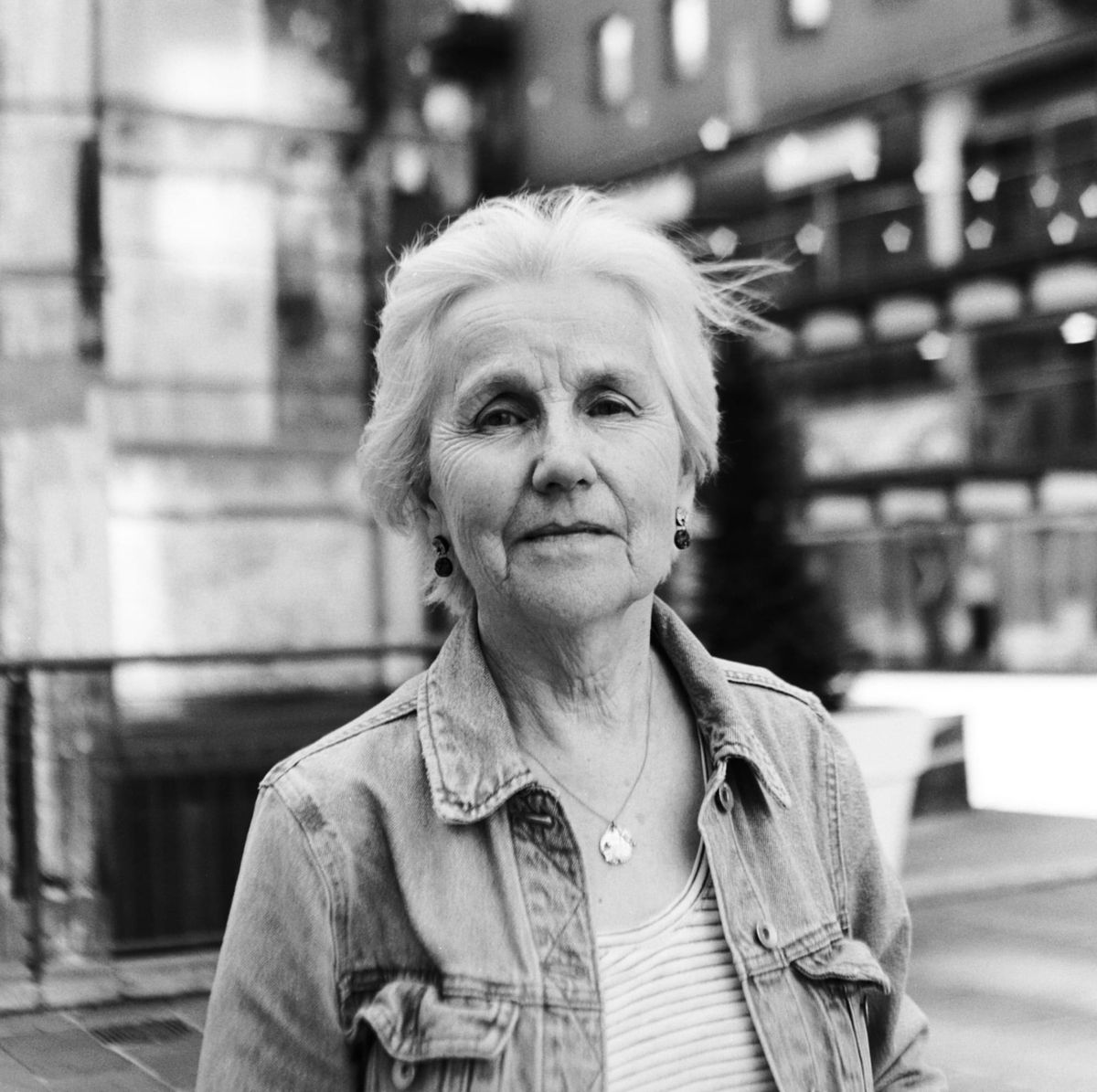
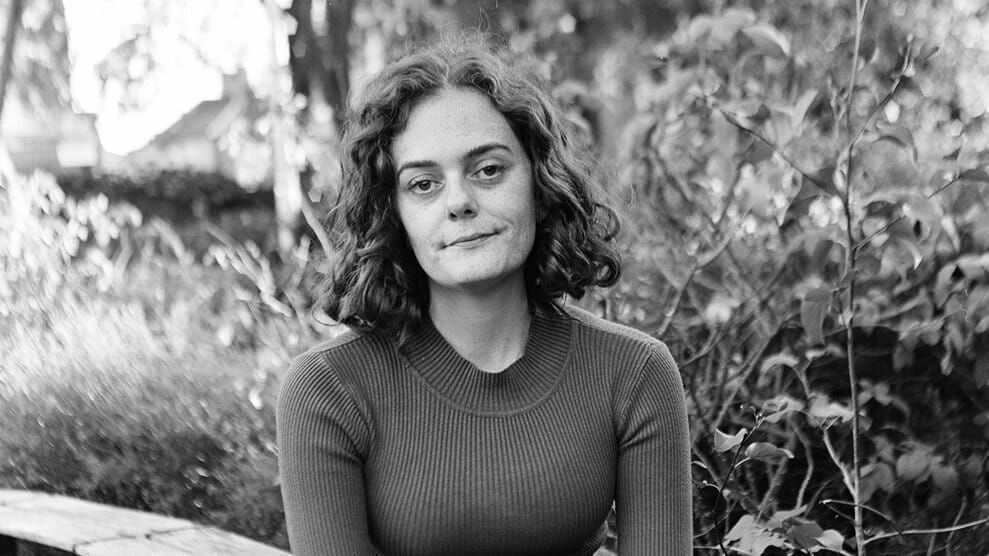
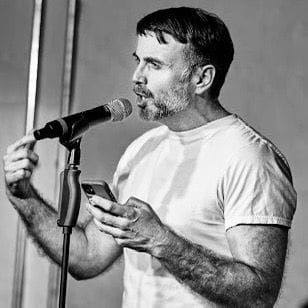
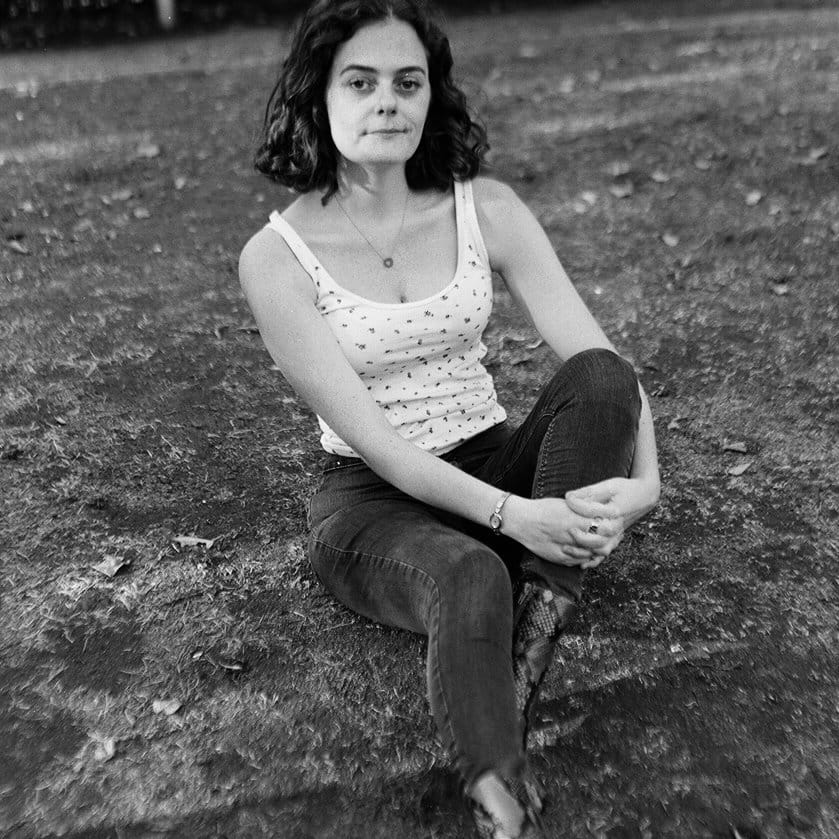
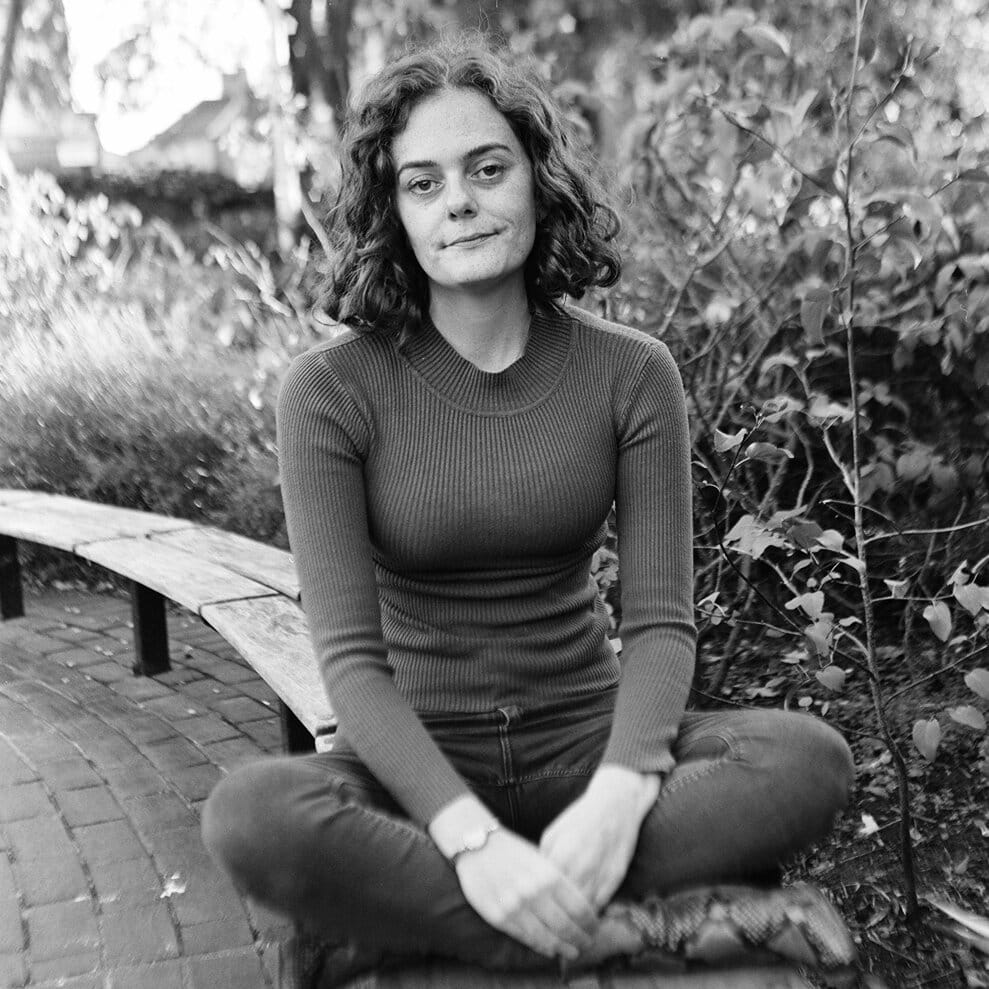
This project has a habit of taking me in surprising circles. I first heard Alice speak at Av a Word Poetry in Peckham a few weeks ago. Where she shared a poem about the River Thames and how it is infested with dodgy eels. (You know the types, the slippery ones in suits who never shut up). And so, it is fitting that we found ourselves on the bank of that very river for our shoot. Alice has a quiet wisdom about her. The kind that is born from experiences no-one should ever have to live through but are the birthplace of deep personal explorations. Which in turn leads to beautiful art and expression. I'm sad Alice lived through what she tells us about in her story, but I am glad she completed the loop and has arrived at a place of wellness and creativity. Over to Alice...
Please be mindful that WSR content can be thematically sensitive.
Alice
I’m Alice Border. I’m originally from a tiny, tiny village in Somerset. My parents were both teachers and this London life that I am living in now is so alien to the way in which I grew up, something that I still feel even though I’ve been living here for nine years, and which I also reflect on in my work.
Tim and I met at Rich Bliss’s ‘Av A Word in Peckham, and as soon as I saw his set I knew that we had a shared understanding of the world! It’s always amazing to click with someone artistically so quickly. I’m also a sucker for film photography and am suitably vain.
Oftentimes at events we only get to know half of someone’s story, and the more we get to know someone the deeper we can engage with their work. I hope that I can learn about my fellow poetry community as part of this project and look forward to many more pieces just like this one.
I’ve always been a misfit. But in July 2024, my life permanently changed when I was first admitted to a psychiatric unit. I went on to spend the next two years in and out of hospital. I lost a lot of people along the way, and came to the poetry scene a very different person to how I used to be. Poetry has allowed me to rebuild my life as best as I can, although there are huge limitations as to how I live now compared to before.
Rapid Tranquillisation
Been here weeks and weeks
can’t remember when I
stopped wanting to eat and
I can’t even stand my
legs are so weak
I’m naked taken
out of a padded room – they had to break
in because I’d barricaded
the door shut
I understand why they
name storms
after people
blood rising up in
my guts I’d
painted the walls red words from
the voices in
tall scrawls nurses shouting
out emergency calls from
down the hall because all I can
do is crawl a body so
small
and it’s not my fault that
in this psych ward this
door
only opens
from the inside
so now I’m on
the floor face
down six of them crushing
me to the ground
no one else around to see what
is happening
one of them leans over
me he’s
firm he’s
stretching skin he’s
breathing on my
eyeball
he injects me liquid
gulps me down and
I breathe blank
into myself
I only ever existed as air.
On the writing process
As a kid I was always either reading or writing – I used to walk home from school with a book open (I fell over a lot). When I turned fifteen I started writing poetry and maintained a poetry Tumblr up until the age of about twenty-three. I have always found writing cathartic, but then university, jobs and general life happened and I stopped writing for a while.
In July 2024 I was hospitalised for mental health for the first time, and I gave up all addictive substances (except sugar, but that’s another matter…). Even after cutting everything out, I was in and out of hospital for a while. When I was an inpatient I developed hypergraphia (a compulsive need to write), and I was lucky enough that in my NHS trust part of the inpatient offering includes therapeutic writing workshops. These workshops helped to channel my focus into something creative, instead of simply compulsive note-taking.
When I was finally discharged I started attending a community writing group at MIND (now Allkind) run by Write-London. My brain was still a mush from all that time in hospital (and still is to a large extent), and when I first started going I had mostly forgotten how grammar even worked! That group then went on to give me the confidence and push to read my work out loud for the first time.
Over time, I naturally developed a focus on a few themes: given my background these include neurodiversity, mental health advocacy and rural living, amongst others.
I try and write every day – when prose poetry is too much I switch to longform or flash fiction, and vice versa. And I try and write first thing, although the medication I am on means that maintaining a consistent sleep schedule (and working memory!) is only ever a hope at best.
Every time something makes me think of a great couplet or line I log it: either in a physical notebook (I am quite picky – softcover B6 is the perfect size), or in a single note on my phone which, at this point, is thousands of lines long.
And every so often an idea will coagulate into a spoken word piece. The process is a strange one: I have a few ideas pinging around at the moment which I know will push themselves together, but they haven’t quite got there yet. The point at which I actually birth the idea normally happens when it gets to the point where I can mind map it – the more spokes that come to mind, the longer the piece. In spoken word, I like to push the theme or concept right out to its limits.
And every so often, I am feeling something so intense that the only option that I have is to write it out. Most of these are hidden away in a folder called JUNK that I will look at only when I am feeling particularly masochistic.
Favourite poets, poetry nights, books or other resources:
I have loved poetry all my life, and I was pretty lucky that my mum was an English teacher and encouraged any and all reading! The first poetry book I ever read was “A Children’s Treasury of Milligan”, by Spike Milligan, and he remains one of my favourite poets: witty and succinct. As a child I also devoured the entire illustrated “Flower Fairies” series, which I still keep on my bookshelves.
Now that I’m an adult I read less poetry and more literary fiction, but my favourite prose poets include Wendy Cope, Leonard Cohen, John Donne, Dylan Thomas and William Blake.
And recently I have loved discovering Cecile Lind, a Danish poet who, amongst many gems, has written one of the most beautiful poetically dense novellas I have ever read (“Girlbeast”).
For spoken word I am lucky enough to have seen and be surrounded by the most amazing poets and people: Stevie Grant, Mahir, Teresa Rendell, Adam DeSalle, Kofi Achina, Lee Campbell, Kristal Sisodia, Chelsea Beechwood, Woodzy, Guy Kelton Jones I and the whole crew (almost an endless list at this point!) at Poets Supporting Poets.
I have found a wonderful community at Poet’s Palace, If Poets Ruled The World, Heart Of The Community, Word Space, Hold Space, POW!, Sofe’s at Morocco Bound, ‘Av A Word, Whitefeather, and Charing Cross Library with DJ.
Books: “Making Cocoa for Kingsley Amis”, “Songs and Sonnets”, “Unutterable Visions, Perishable Breath”.
Write Speak Recover, in collaboration with TheNeverPress is an open, free collection of original portraits of poets using their art to find strength in their recovery journey from any form of dis-ease.
We invite you to follow Write Speak Recover on Instagram and to reach out to Tim Foley at WSR or us directly at the zine to learn more, or put yourself forward to be featured in this initiative.
Hit the logo for more Write Speak Recover content 👇
If you need support, here are some resources:
Samaritans
Alcohol Change
Recovery Dharma
Alcoholics Anonymous
This article was brought to you by Tim Foley and Graham Thomas.